

Forex trading can be profitable when traders use a proven strategy with proper risk management. Many beginners lose money because they trade without a plan, chase indicators, or enter trades emotionally.
In this guide, you will learn one of the best forex trading strategies that professional traders use to identify high-probability setups using market structure, supply and demand, and trend confirmation.
This strategy works well for:
Gold (XAU/USD)
EUR/USD
GBP/USD
USD/JPY
It is beginner-friendly, simple to understand, and effective for both swing traders and intraday traders.
What Is the Best Forex Trading Strategy?
The best forex trading strategy is one that:
● Follows the market trend
● Uses proper risk management
● Has clear entry and exit rules
● Avoids emotional trading
One of the most effective strategies is the Market Structure + Supply & Demand Strategy.
Professional traders and institutions use price action and liquidity concepts instead of relying on random indicators.
Why Most Forex Traders Fail
Before learning the strategy, it is important to understand why traders lose money.
Most traders fail because they:
● Trade against the trend
● Overtrade
● Use too many indicators
● Risk too much on one trade
● Trade without confirmation
● Ignore stop losses
Successful trading is more about discipline and consistency than finding a “magic indicator.”
Step 1: Identify the Market Trend
The first step is determining whether the market is bullish or bearish.
Use the 4-hour timeframe (H4) to identify the overall trend.
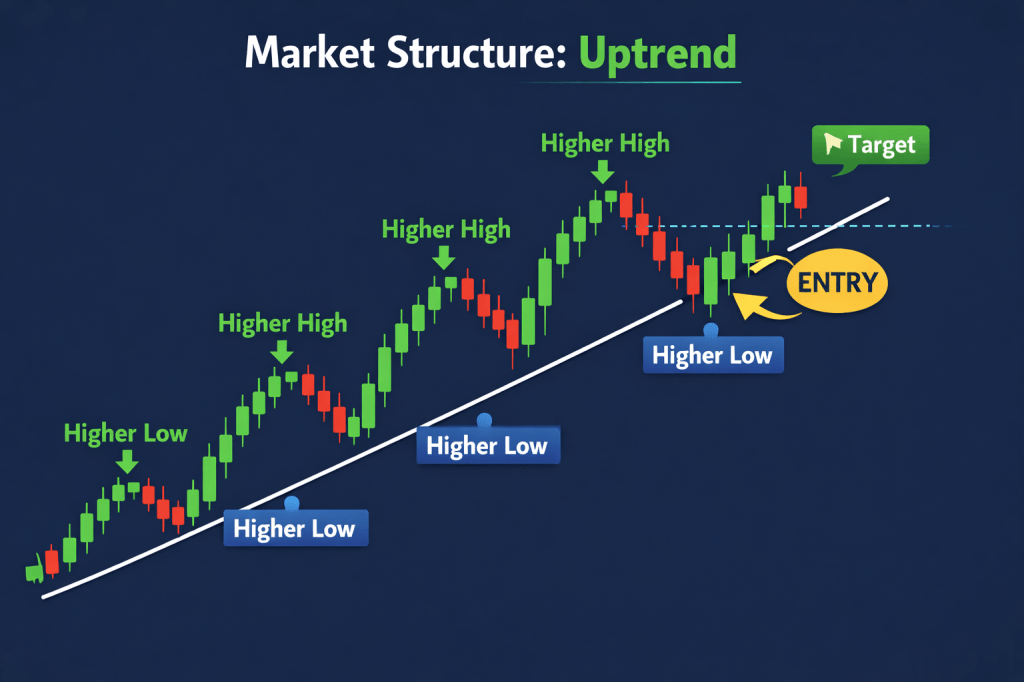
Uptrend Structure
An uptrend forms when price creates:
● Higher highs (HH)
● Higher lows (HL)
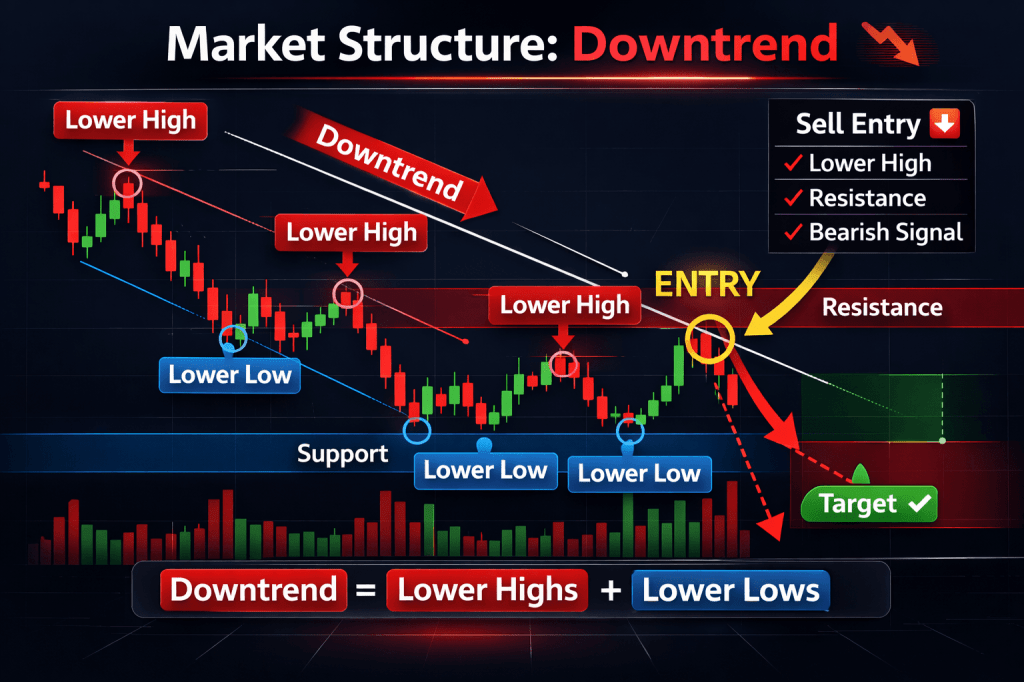
Downtrend Structure
A downtrend forms when price creates:
● Lower highs
● Lower lows
Trading Rule
● Only buy in an uptrend
● Only sell in a downtrend
Trading with the trend increases the probability of success.
Step 2: Mark Supply and Demand Zones
After identifying the trend, move to the 1-hour timeframe (H1).
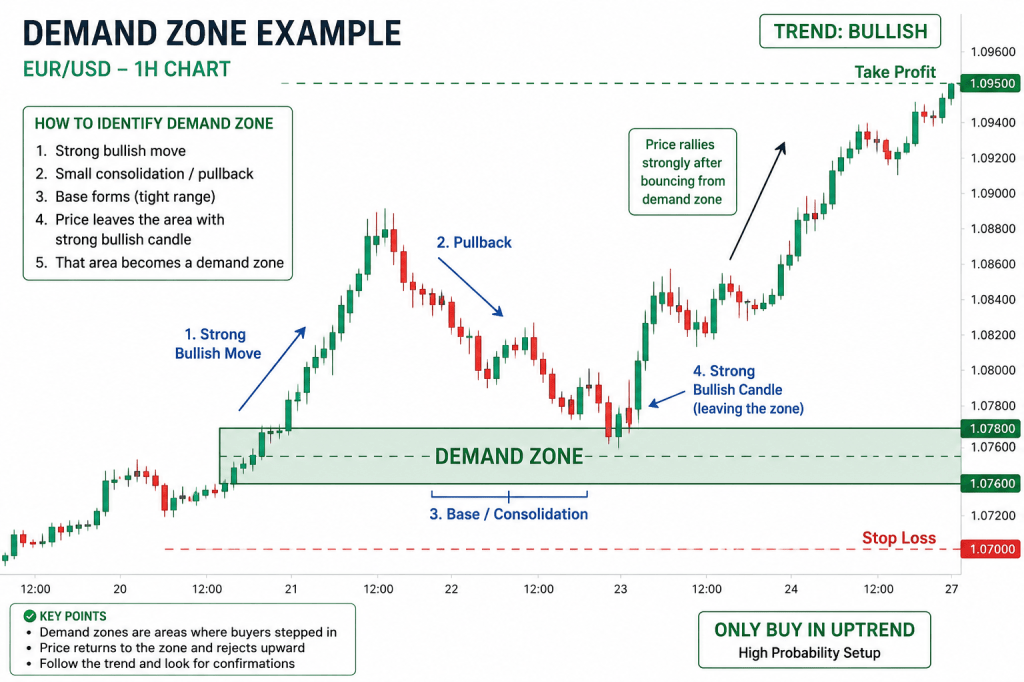
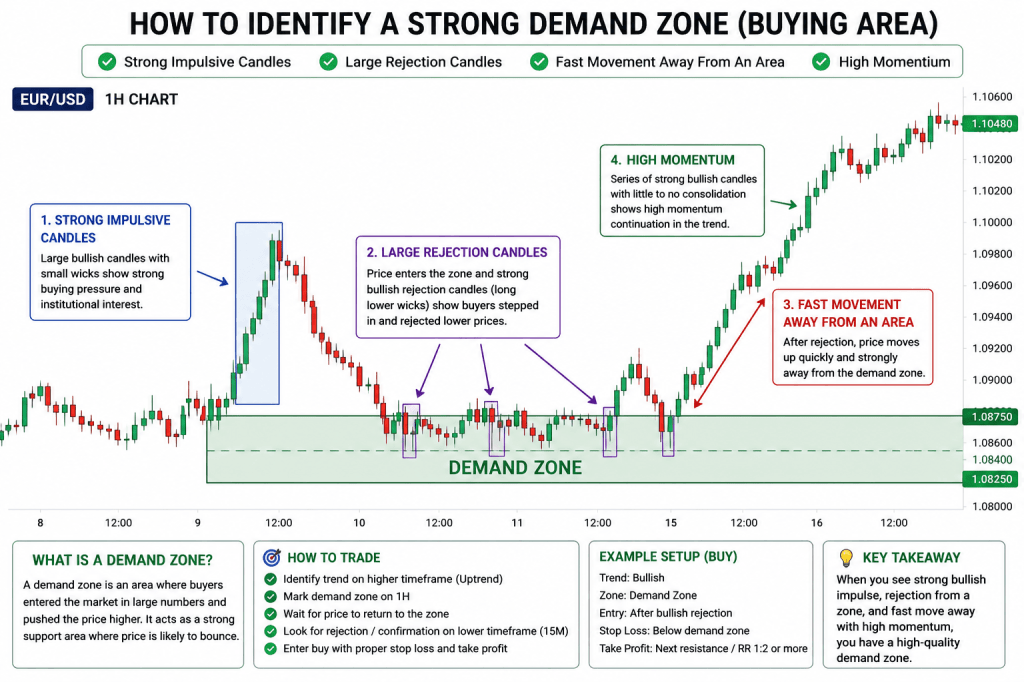
What Is a Demand Zone?
A demand zone is an area where buyers entered strongly and pushed price upward.
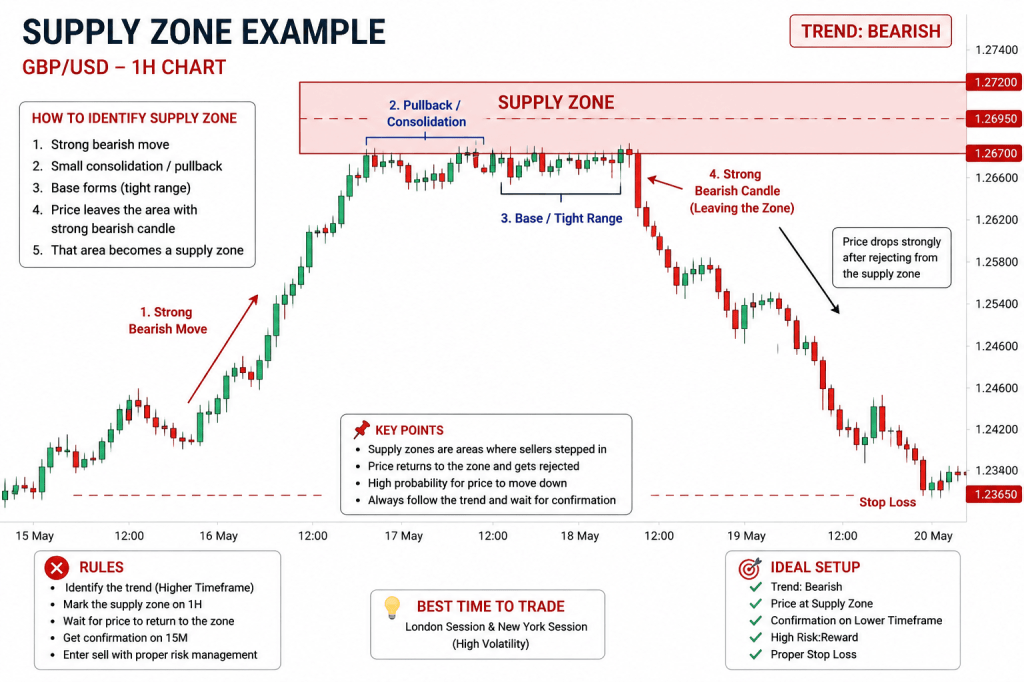
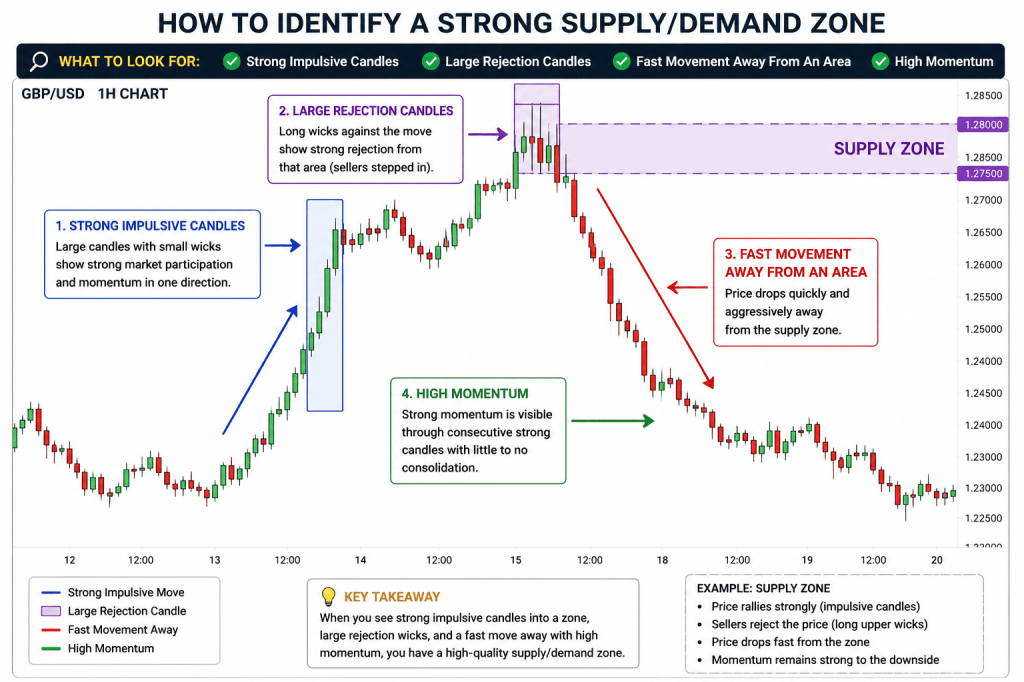
What Is a Supply Zone?
A supply zone is an area where sellers entered strongly and pushed price downward.
How to Identify Strong Zones
Look for:
Strong impulsive candles
Large rejection candles
Fast movement away from an area
High momentum
These zones often act as institutional entry points.
Step 3: Wait for Price Retracement
Patience is one of the most important skills in forex trading.
Do not chase the market.
Wait for price to retrace back into:
● Demand zones during an uptrend
● Supply zones during a downtrend
Many beginners lose money because they enter trades too late after large price movements.
Professional traders wait for price to come to them.
Step 4: Use Entry Confirmation
Move to the 15-minute timeframe (M15) for confirmation before entering a trade.
Buy Confirmation Signals
Look for:
● Bullish engulfing candles
● Break of bearish structure
● Rejection wicks from demand
Sell Confirmation Signals
Look for:
● Bearish engulfing candles
● Break of bullish structure
● Rejection from supply
● Confirmation helps reduce false entries.
Step 5: Place Your Stop Loss Properly
Risk management is essential in forex trading.
For Buy Trades
Place the stop loss:
Below the demand zone
For Sell Trades
Place the stop loss:
Above the supply zone
Never move your stop loss emotionally.
Step 6: Use a Proper Risk-to-Reward Ratio
Professional traders focus heavily on risk-to-reward ratios.
A minimum ratio of:
means:
Risk $10 to potentially make $20
This allows traders to remain profitable even if some trades lose.
Step 7: Risk Management Rules
Risk management separates profitable traders from gamblers.
Risk only:
2% per trade for Currency Pairs and 3% For Gold and Silver due to high volatility
Maximum 2 trades daily
Example
If your account balance is $1,000:
Maximum loss per trade should be $20 for Currency pair and $30 for Gold ( XAUUSD ) and Silver ( XAGUSD).
This protects your account during losing streaks
Best Time to Trade Forex
The best trading sessions are:
London session
New York session
These sessions provide:
Higher liquidity
Better volatility
Cleaner price movement
Avoid trading during:
Low-volatility market hours
Major news events if inexperienced
Example of a Complete Forex Trade Setup
Buy Trade Example
1.H4 trend is bullish
2.Mark demand zone on H1
3.Wait for retracement into demand
4.Watch for bullish confirmation on M15
5.Enter buy trade
6.Place stop loss below demand
7.Set take profit at resistance
8.This creates a structured and disciplined trading process.
Common Mistakes Forex Traders Make
Avoid these mistakes:
● Overtrading
● Revenge trading
● Ignoring stop losses
● Trading without confirmation
● Risking too much capital
● Following signals blindly
Consistency comes from discipline and patience.
Best Broker for Gold Trading
OPEN YOUR WISUNO ACCOUNTRisk Disclaimer : Trading forex and CFDs involves significant risk of loss and is not suitable for all investors. Leverage can work against you as well as for you. You should only trade with capital you can afford to lose. This review is for informational purposes only and does not constitute financial advice or a recommendation to use any particular broker. Always conduct your own due diligence before depositing funds with any broker.

